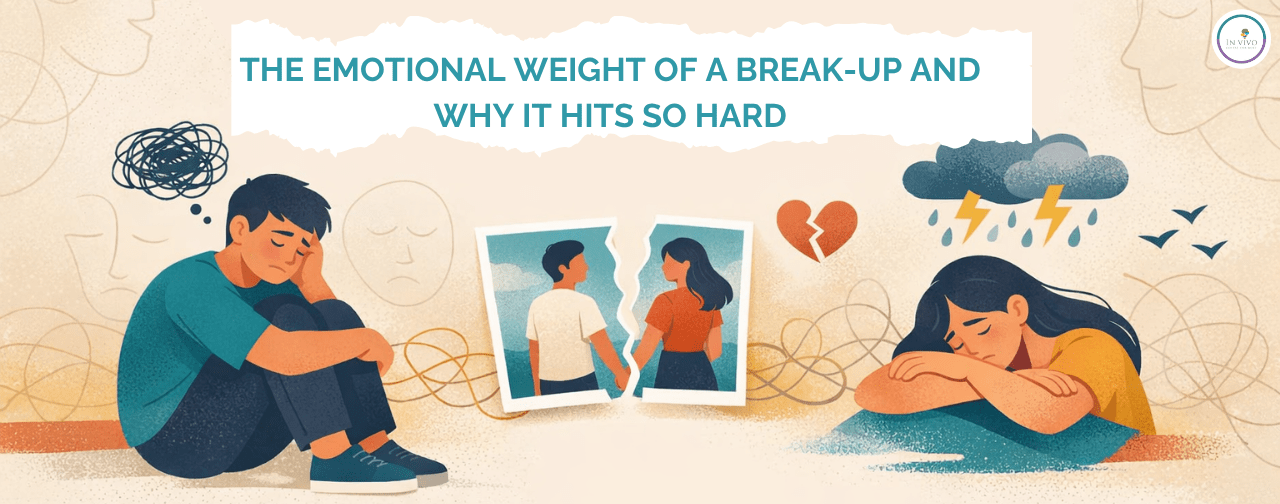
The end of a relationship can feel like the ground has shifted beneath you.
That’s not an exaggeration — and it’s not weakness. The emotional impact of a break-up often mirrors grief, because in many ways, it is grief. You’re not just losing a person. You’re losing a shared future, a daily rhythm, and a significant piece of your emotional world.
What makes break-ups particularly difficult is how many layers of feeling they carry — often all at once. Alongside sadness, people find themselves navigating anxiety, hurt, guilt, shame, and sometimes depression. These don’t arrive neatly or one at a time. They arrive together, creating an inner tangle that can feel impossible to sort through.
What's Actually Happening Beneath the Surface
Certain themes show up again and again — loss, self-doubt, rejection, and a sense of unfairness.
If you were the one left, you may be sitting with feelings of abandonment that go far deeper than the relationship itself. If you were the one who ended things, you might be grappling with guilt, or a quiet sense of having broken something you valued — including your own moral code.
There is also what researchers sometimes describe as a physical dimension to heartbreak. The body responds to emotional pain much as it does to physical trauma. The chest tightness and physical heaviness that people experience are real — not imagined.
Why It Can Feel Like Losing Yourself
In close relationships, something quietly happens over time: our goals, values, and sense of self begin to intertwine with our partner’s. Psychologists call this identity fusion.
When a relationship ends, the loss isn’t just relational — it’s also a loss of the self that was built around that relationship. The question “Who am I now?” can feel genuinely disorienting, not dramatic.
For many people, the relationship had become the primary source of meaning and stability. When it’s good, life feels good. When it ends, life can suddenly feel empty or colourless. This “all or nothing” shift in how things feel is worth naming — because it’s a signal, not a fact about the future.
Grieving What Could Have Been
There is also the loss of a potential — the imagined future, the plans, the milestones that will now look different. This particular grief is often overlooked, but it can be one of the most painful layers. You’re not just mourning what was. You’re mourning what you had expected life to become.
What Actually Helps
Healing from a break-up is not linear, and it doesn’t follow a set timeline. The process is slower for some people, and that’s not a reflection of how much the relationship meant or how emotionally capable you are.
What tends to help most is not bypassing the pain — it’s learning to sit with it without letting it define what’s possible next. That means:
- Allowing yourself to feel what’s there, without judgment about whether you “should” feel it
- Recognising that difficult emotions are appropriate responses to a real loss — they don’t mean something is wrong with you
- Being genuinely gentle with yourself in the way you would be with someone you care about
- Seeking support when the weight becomes too much to carry alone
In REBT, we look closely at the beliefs underneath the pain. Not to dismiss the feelings — but to understand what’s amplifying them. Thoughts like “I will never feel okay again” or “This proves I’m not lovable” are worth examining, not because they’re silly, but because they’re not accurate — and they make recovery significantly harder.
If you’re in the middle of this and it feels heavier than you can manage on your own, we’re here. In Vivo offers individual counselling in Mumbai for people navigating relationship loss — at your pace, without judgment. → https://invivo.co.in/counseling-services/